Data Breach Costs: What Really Drives the Financial Impact
The direct technical expense of a breach is often smaller than the long-term costs of lost trust and operational disruption.

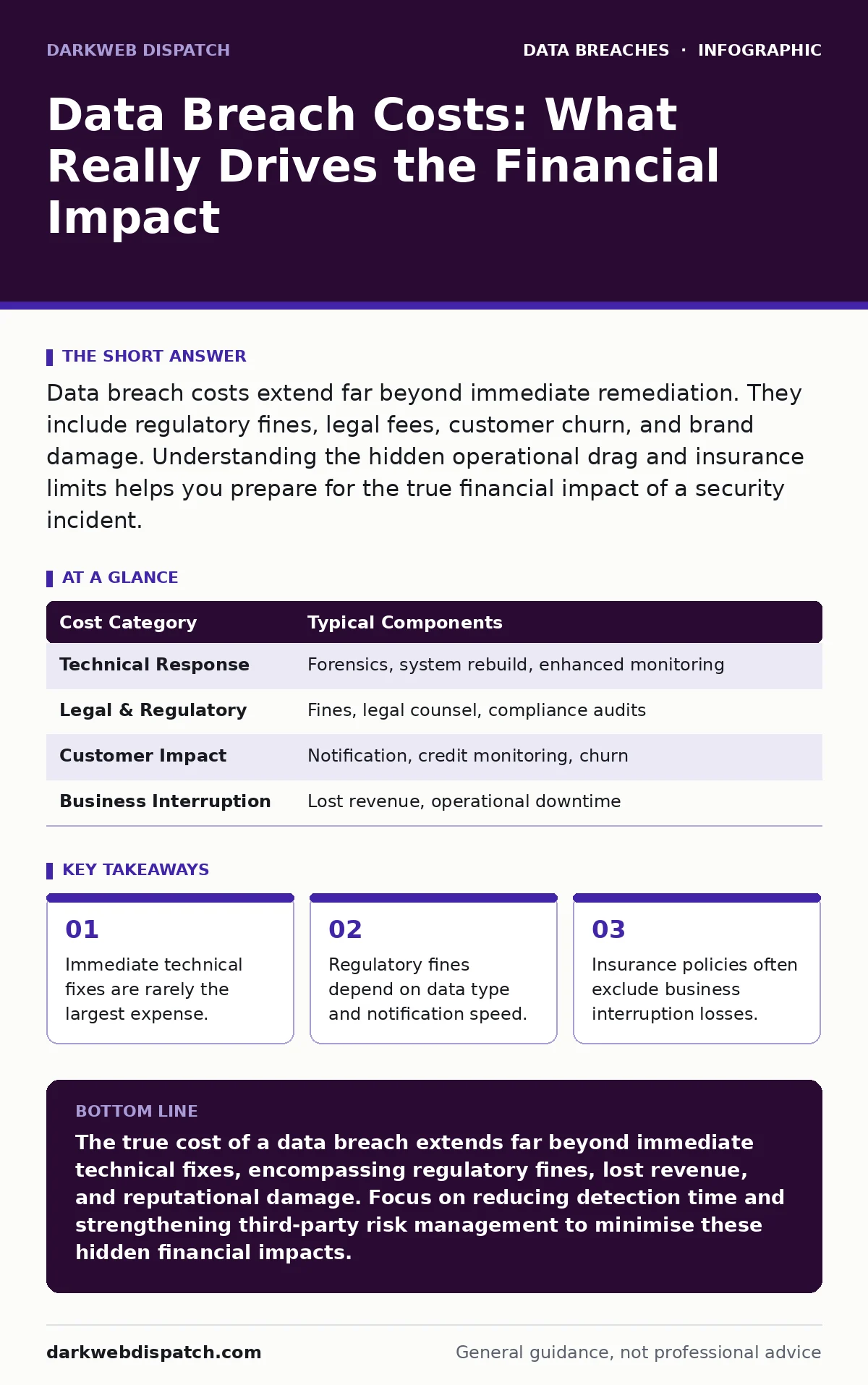
Data breach costs extend far beyond immediate remediation. They include regulatory fines, legal fees, customer churn, and brand damage. Understanding the hidden operational drag and insurance limits helps you prepare for the true financial impact of a security incident.
Why do data breach costs vary so much between organisations?
The financial impact depends on the type of data exposed, the speed of detection, and the legal jurisdiction involved. A breach involving health records triggers stricter penalties than one involving public contact details. The duration of the incident also matters, as prolonged exposure increases the volume of compromised records and the complexity of remediation.
What are the immediate technical costs after a breach?
You face expenses for forensic investigation, system restoration, and enhanced monitoring. Forensic firms trace the entry point and scope of the intrusion, which requires specialised tools and expert labour. Restoring systems from clean backups ensures integrity but takes time, during which normal operations may halt.
How do regulatory fines add to the total cost?
Regulators impose penalties based on the severity of the breach and whether you followed established security frameworks. Fines can be substantial if you failed to implement basic protections like encryption or access controls. Compliance with standards such as the PCI DSS for payment data or the HIPAA Security Rule for health information can mitigate these penalties by demonstrating due diligence.
| Cost Category | Typical Components |
|---|---|
| Technical Response | Forensics, system rebuild, enhanced monitoring |
| Legal & Regulatory | Fines, legal counsel, compliance audits |
| Customer Impact | Notification, credit monitoring, churn |
| Business Interruption | Lost revenue, operational downtime |
What hidden operational costs do most organisations miss?
Operational drag occurs when staff divert time from core tasks to manage the breach response. This includes answering customer queries, updating security policies, and training employees on new procedures. The loss of productivity is often invisible on balance sheets but significantly impacts long-term profitability.
How does customer churn affect long-term revenue?
Trust is difficult to rebuild once it is broken, leading to customers switching to competitors. Even if the breached data was not highly sensitive, the perception of weakness can damage your brand reputation. Retaining customers post-breach often requires costly incentives or service improvements that erode profit margins.
Do cyber insurance policies cover all breach costs?
Policies vary widely, and many exclude business interruption or reputational damage. Some exclude costs related to shadow IT data exposure where unauthorised software was used. It is vital to read the exclusions carefully, as a policy might cover forensic costs but leave you liable for regulatory fines or legal settlements.
How does the speed of detection influence total costs?
Faster detection limits the scope of the breach, reducing the amount of data exfiltrated and the time systems are compromised. Organisations that detect breaches internally rather than through external reports typically incur lower costs. Investing in continuous monitoring and log analysis helps identify anomalies before they escalate into major incidents.
What role does third-party risk play in breach costs?
Suppliers and partners often have weaker security controls, making them attractive targets for attackers. A breach in a third-party risk assessments partner can expose your data and trigger liability for you. You are responsible for ensuring your partners meet your security standards, or you face the financial consequences of their failures.
How can you reduce the financial impact of a future breach?
Implementing strong secrets management practices prevents attackers from easily accessing credentials and escalating privileges. Regular security assessments and employee training reduce the likelihood of successful email account compromise or phishing attacks. While no measure guarantees complete protection, layered security reduces the probability and impact of incidents.
Why is post-breach communication so expensive?
Notifying affected individuals and regulators requires careful legal review and coordinated messaging. Poor communication can exacerbate reputational damage, leading to further customer loss and legal challenges. Transparent, timely updates help maintain trust, but preparing these communications involves significant legal and public relations costs.
Key takeaways
- Immediate technical fixes are rarely the largest expense.
- Regulatory fines depend on data type and notification speed.
- Insurance policies often exclude business interruption losses.
The true cost of a data breach extends far beyond immediate technical fixes, encompassing regulatory fines, lost revenue, and reputational damage. Focus on reducing detection time and strengthening third-party risk management to minimise these hidden financial impacts.
Frequently asked questions
What is the average cost of a data breach?
Costs vary widely based on industry, data type, and response time, making averages less useful than understanding your specific risk profile.
Does cyber insurance cover regulatory fines?
Coverage varies by policy; some include regulatory defence costs, while others exclude fines entirely, so you must check your specific terms.
How long does it take to recover financially from a breach?
Recovery time depends on the severity of reputational damage and customer churn, with some organisations facing financial impacts for years.
Can a small data breach be more expensive than a large one?
Yes, if the small breach exposes highly sensitive data or triggers severe regulatory penalties, the costs can exceed those of a larger, less sensitive incident.
How this guide was produced: written by the DarkWeb Dispatch editorial team with AI assistance, checked against the public references listed below, and reviewed when the facts change. See our editorial policy or report an error.