Microsegmentation: Why Flat Cloud Networks Fail Your Security
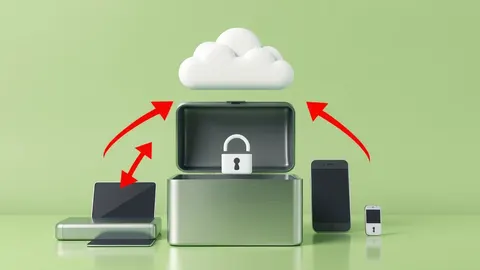
Microsegmentation isolates workloads at the application level, ensuring a breach in one service cannot spread to others, even if the perimeter is breached.

Microsegmentation divides your cloud network into tiny, isolated zones based on application needs rather than broad subnets. It stops lateral movement by enforcing strict communication rules between individual workloads. This approach limits the blast radius of any compromise and reduces reliance on perimeter defences that attackers increasingly bypass.
The Illusion of the Perimeter
Traditional cloud security relies heavily on the concept of a perimeter. You place a firewall at the edge of your Virtual Private Cloud (VPC) and assume that anything inside is safe. This model worked when data centres were physical rooms with locked doors. It fails in dynamic cloud environments where workloads spin up and down in seconds.
Attackers no longer need to break through the front door. They often find an open window through a misconfigured service or a compromised user account. Once inside, they move laterally. They travel from one server to another, seeking higher privileges or sensitive data. In a flat network, this movement is unrestricted. The attacker has free rein.
Microsegmentation changes this dynamic. It treats every workload as a potential security boundary. Instead of trusting the internal network, it requires explicit permission for every connection. This approach assumes breach. It prepares for the moment an attacker gets in.
Why Flat Networks Are Dangerous
Imagine a cloud environment where all web servers, databases, and administrative tools share the same subnet. An attacker compromises a low-privilege web server through a software vulnerability. In a flat network, that server can talk to any other server. The attacker pivots to the database server next. They dump the customer records. The entire operation happens within minutes.
This scenario is common because flat networks are easier to configure. Teams often deploy services quickly without considering internal trust boundaries. They rely on the perimeter firewall to keep threats out. They forget that the perimeter is porous. Internal threats, whether malicious insiders or compromised accounts, bypass perimeter controls entirely.
Without microsegmentation, you cannot stop an attacker who is already inside. You can only hope they do not find what they are looking for. This hope is not a strategy. It is a vulnerability waiting to be exploited.
How Microsegmentation Works
Microsegmentation operates at the application level. It uses policies to define which workloads can communicate with each other. These policies are based on identity, not just IP addresses. A web server can talk to a specific database port, but not to the administrative console. A database can accept queries from the web server, but not from the internet.
These policies are enforced by a virtual firewall or a host-based agent. The agent sits on the virtual machine or container. It inspects every packet that enters or leaves the workload. If the packet does not match a policy, it is dropped. This happens before the traffic reaches the network infrastructure.
This method provides granular control. You can restrict access to specific ports, protocols, and even application-layer data. It aligns security with the actual needs of the application. This alignment is the core of least privilege in the cloud. It ensures that each component has only the access it strictly needs to function.
The Decisions It Informs
Implementing microsegmentation requires careful planning. It is not a set-and-forget solution. You must make several key decisions about how your application components interact. These decisions shape the security posture of your entire environment.
| Decision | How it helps |
|---|---|
| Defining trust domains | Limits the scope of a breach to a specific group of related services. |
| Selecting policy granularity | Balances security strength with management overhead and performance. |
| Choosing enforcement points | Determines whether policies are applied at the hypervisor, host, or network level. |
| Integrating with identity | Ensures that security follows the workload, even as it moves or scales. |
These decisions affect how you design your architecture. They influence how you manage changes. They determine how quickly you can respond to threats. Getting them right early saves significant effort later.
What Goes Wrong Without It
Without microsegmentation, your security is blind to internal movement. You see traffic entering the perimeter, but you do not see where it goes inside. An attacker can move silently through your network. They can escalate privileges and exfiltrate data without triggering alarms.
This lack of visibility makes incident response difficult. When a breach occurs, you do not know the extent of the damage. You must assume the worst. You may need to shut down entire services to contain the threat. This causes downtime and loss of revenue.
Microsegmentation provides visibility. It logs every connection attempt. It shows you exactly who is talking to whom. This data helps you detect anomalies. It allows you to contain breaches quickly. It turns a catastrophic failure into a manageable incident.
See also: Stop Cloud Storage Leaks: 7 Misconfiguration Mistakes · Policy as Code: Definition, Purpose and Practical Cloud Security
How Teams Use It
Teams use microsegmentation to enforce security policies automatically. They integrate it with their deployment pipelines. As new services are deployed, the security policies are applied automatically. This is a key part of DevSecOps. It ensures that security is built in from the start.
Teams also use it to comply with regulations. Many standards require strict access controls and data isolation. Microsegmentation provides the evidence needed for audits. It shows that access is restricted and monitored.
It is also used to protect sensitive data. Databases containing personal information are isolated from other services. Only authorised applications can access them. This reduces the risk of data leakage. It protects against SaaS account takeover and other credential-based attacks.
Hidden Costs and Trade-offs
Microsegmentation is not free. It requires management. You must define and maintain policies for every workload. This can be complex in large environments. Poorly designed policies can block legitimate traffic. This causes application errors and downtime.
There is also a performance cost. Inspecting every packet takes processing power. This can slow down your applications. You must balance security with performance. Too much inspection can degrade user experience.
Another hidden cost is the skill gap. Your team needs to understand both networking and security. They must know how to write effective policies. Training and hiring add to the cost. You must weigh these costs against the risk of a breach.
Integrating with Other Controls
Microsegmentation works best when combined with other security measures. It complements single sign-on by enforcing access controls at the network level. It reduces the impact of MFA for cloud accounts failures by limiting what a compromised account can do.
It also helps mitigate OAuth token abuse. If an attacker steals a token, they can only access the resources allowed by the microsegmentation policy. This limits their ability to move laterally.
It should be part of a broader strategy. It does not replace cloud backup or monitoring. It adds a layer of defence. It makes your environment more resilient. It ensures that a single point of failure does not compromise your entire system.
Key takeaways
- It shifts security from the network edge to the workload, neutralising lateral movement.
- It enforces least privilege at the application layer, reducing the impact of leaked credentials.
- It provides granular visibility into internal traffic, making anomalous behaviour easier to spot.
Microsegmentation stops attackers from moving freely inside your cloud. Start by isolating your most sensitive data and enforcing strict communication rules between services.
Frequently asked questions
Does microsegmentation replace firewalls?
No, it complements them. Traditional firewalls protect the perimeter. Microsegmentation protects the internal network. Both are needed for defence in depth.
Is microsegmentation only for large enterprises?
No, it is valuable for any organisation using the cloud. Small teams benefit from reduced complexity and better visibility. Many cloud providers offer built-in tools.
How do I start implementing microsegmentation?
Begin by mapping your application dependencies. Identify critical assets. Define policies for those assets first. Use automated tools to manage policies at scale.
Does microsegmentation affect performance?
It can add slight latency. However, modern implementations are highly optimised. The security benefits usually outweigh the minor performance impact.
How this guide was produced: written by the DarkWeb Dispatch editorial team with AI assistance, checked against the public references listed below, and reviewed when the facts change. See our editorial policy or report an error.